
Are you wondering whether simply rubbing Vaseline on your feet will actually make those stubborn calluses disappear?
Does Vaseline Get Rid Of Calluses?
Blog creation date: January 21, 2026
If you’re asking whether Vaseline (petroleum jelly) will get rid of calluses, the short answer is: not completely on its own. Vaseline is an excellent occlusive moisturizer that locks in moisture and can soften the thickened skin that forms calluses, but it does not remove the excess dead skin or address the mechanical causes that created the callus in the first place. You can use it as part of a care plan to manage calluses, but you’ll usually need additional measures—such as gentle exfoliation, protective padding, footwear changes, or professional care—to reduce or eliminate them.
Below you’ll find an in-depth, practical guide that explains what calluses are, how Vaseline helps (and where it falls short), step-by-step ways to use Vaseline safely, other effective treatments, when you should see a podiatrist, and reputable sources so you can read more.
Quick summary
- Vaseline can soften and hydrate callused skin but won’t remove the thick layer by itself.
- Combine Vaseline with safe mechanical reduction (pumice, emery board) or keratolytic agents (salicylic acid, urea) for better results.
- If you have diabetes, poor circulation, neuropathy, or persistent pain, seek professional evaluation rather than attempting aggressive self-treatment.
What is a callus and why does it form?
A callus is an area of thickened, hardened skin that develops where repeated friction, pressure, or rubbing occurs. Calluses form when your body increases production of keratin (a protective protein) to shield the skin underneath. While calluses are often harmless, they can become painful, crack, or hide other problems when they grow large or when you have conditions that impair healing.
You should know that calluses are a protective response—not an infection—and they’re common on feet, hands, and anywhere repeated pressure happens. Addressing the mechanical forces (shoes, gait, repetitive tasks) is essential for lasting improvement.
How Vaseline (petroleum jelly) works
Vaseline is a petroleum jelly product that acts as an occlusive moisturizer. That means it forms a barrier on the skin to:
- Prevent moisture loss,
- Protect against external irritants,
- Help skin rehydrate and remain supple.
Because it locks in moisture, Vaseline helps soften the thickened outer layer of dead skin that makes up a callus. When callused skin is softer, you can more safely and effectively reduce it using gentle mechanical methods or keratolytic agents. However, Vaseline does not actively dissolve keratin or exfoliate dead skin—it only creates conditions (hydration and barrier protection) that make other treatments work better.
What Vaseline can and cannot do for calluses
You’ll benefit from understanding realistic expectations:
- What Vaseline can do
- Soften the callused skin, making it more pliable.
- Improve comfort by reducing friction and preventing cracking.
- Protect the area from additional irritation when used as a barrier (especially inside shoes or under padding).
- Improve the effectiveness of keratolytic creams when applied beforehand.
- What Vaseline cannot do
- Dissolve or remove significant layers of thickened keratin by itself.
- Correct the mechanical causes of callus formation (poor-fitting shoes, abnormal biomechanics).
- Replace professional debridement by a podiatrist when calluses are severe, painful, or complicated by medical conditions.
How to use Vaseline safely for calluses
If you decide to use Vaseline to help manage calluses, follow a conservative and safe approach:
- Soak your foot first. Soaking in warm water for 10–15 minutes helps hydrate the skin and loosen thick scales. Avoid very hot water that could harm fragile skin.
- Gently file. After soaking, use a pumice stone or foot file to remove dead skin gently. Work slowly and avoid removing too much skin in one session—only remove small amounts to avoid raw skin.
- Apply Vaseline. Spread a thin layer of Vaseline over the softened callus to lock in moisture and protect the area.
- Cover at night. If you want, put on a clean cotton sock to help Vaseline stay in contact with the callus overnight.
- Repeat. Do this regimen regularly (several times a week) while monitoring progress.
Important safety tips:
- Never try to cut a callus with a razor or kitchen knife. That significantly increases the risk of infection and injury.
- If you have diabetes, peripheral neuropathy, poor blood flow, or immune compromise, do not attempt aggressive home debridement. See a podiatrist for safe care.
- Stop any treatment that causes pain, bleeding, or signs of infection (increased redness, warmth, pus).
Comparison: Vaseline versus other topical options
A visual comparison helps you choose what to pair with Vaseline or consider instead. The table below summarizes common topical options and their pros and cons.
| Product | How it works | Pros | Cons | When to use |
|---|---|---|---|---|
| Vaseline (petroleum jelly) | Occlusive moisturizer that locks in moisture | Inexpensive, widely available, gentle, protective | Doesn’t remove thickened skin by itself | For softening skin, preventing cracks, everyday protection |
| Urea creams (10–40%) | Keratolytic that helps soften and break down keratin | Effective at reducing thick calluses, hydrates | May cause stinging if applied to raw skin | Moderate to severe calluses; follow directions |
| Salicylic acid (1–40%) | Keratolytic that dissolves dead skin cells | Effective exfoliant, widely used in pads/patches | Can irritate surrounding skin; not for diabetics without supervision | Thick calluses; use with caution |
| Alpha-hydroxy acids (lactic acid) | Chemical exfoliant and humectant | Hydrates and mildly exfoliates | Less potent than salicylic acid | Mild calluses or maintenance |
| Urea + lactic acid combos | Both keratolytic and hydrating | Good balance of exfoliation and hydration | Cost varies | Chronic, thickened skin needing regular care |
| Pumice stone/emery board | Mechanical exfoliation | Inexpensive, immediate results | Can remove too much skin if misused | After soaking to gently reduce thick skin |
| Professional debridement (podiatrist) | Scalpel removal of keratin | Fast, safe, targeted, reduces pain | Requires clinical appointment and cost | Large, painful, or complicated calluses |
When you might combine Vaseline with other treatments
You’ll often get the best results by combining Vaseline with other modalities. For example:
- Use Vaseline after mechanical reduction (pumice) to seal in moisture and protect the area.
- Apply Vaseline after using a keratolytic cream to reduce drying and irritation of surrounding skin.
- Put Vaseline under protective padding to reduce friction from shoes.
By softening the callus first and protecting peeled or reduced areas afterwards, you lower the risk of cracking, rawness, and infection.
Non-invasive treatments you can try at home
If your callus is not painful and you don’t have complicating medical issues, you can try a home regimen:
- Foot soaks: Warm water with a mild foot soak solution for 10–15 minutes.
- Gentle mechanical reduction: Use a pumice stone or foot file on wet skin once or twice weekly.
- Moisturizing: Apply Vaseline or a thick urea-containing cream nightly to keep skin soft.
- Protective padding: Use non-medicated corn/callus pads or moleskin to redistribute pressure.
- Footwear changes: Choose shoes with roomy toe boxes, cushioning, and supportive soles.
- Activity modification: Reduce repetitive motions that create pressure, if possible.
Monitor your skin for changes, and pause if you notice increased pain, bleeding, or signs of infection.
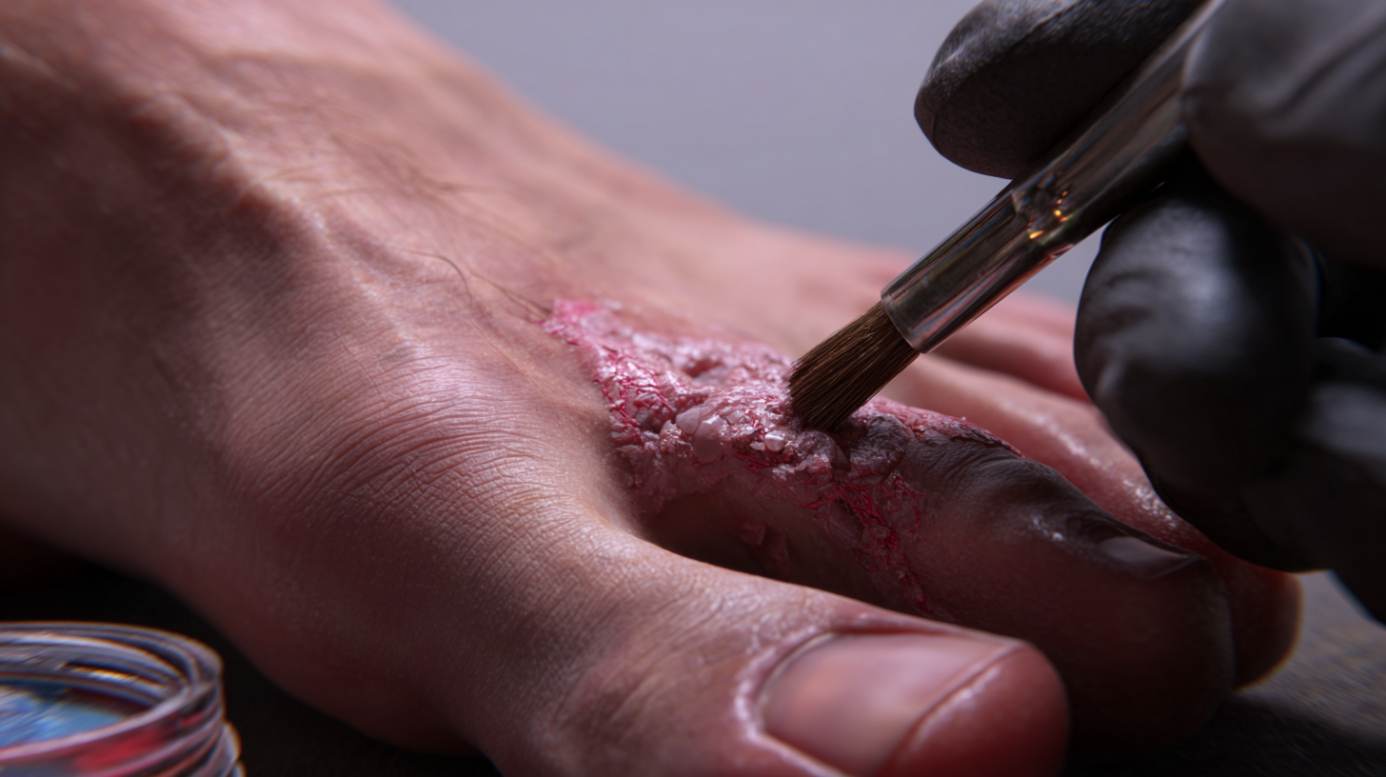
When to use keratolytic products instead of (or with) Vaseline
Keratolytics such as salicylic acid and urea actively break down the protein structure of thickened skin. Use them when calluses are thick and not responding to moisturizing alone.
- Salicylic acid is available in liquid, gel, pad, and plaster forms and helps dissolve dead skin. It can be effective, but it can also irritate healthy nearby skin.
- Urea creams (often 10–40%) are both hydrating and keratolytic and are often better tolerated for long-term use.
If you use these products, follow instructions carefully. Apply them only to the callus area, and protect surrounding normal skin. After keratolytic treatment, apply Vaseline to soothe and protect the area.
Professional treatments offered by podiatrists
If home care doesn’t help or if your callus is painful, your best step may be to see a podiatrist. At LMD Podiatry, Dr. Lauren Dabakaroff and the clinical team provide conservative, non-invasive, and procedural options, tailored to your foot health needs. Typical professional approaches include:
- Paring and debridement: A podiatrist uses sterile instruments to safely and precisely remove thickened keratin layers, which often provides rapid pain relief.
- Custom orthotics: If abnormal pressure or gait is causing calluses, custom shoe inserts can redistribute pressure and prevent recurrence.
- Shoe assessment and recommendations: Proper footwear is one of the best long-term solutions.
- Padding and offloading devices: Built-in shoe pads or custom devices can reduce friction and pressure at focal points.
- Treatment of underlying conditions: If corns, hammertoes, or structural foot problems contribute to callus formation, addressing those issues reduces recurrence.
If you have diabetes, vascular disease, neuropathy, or a history of foot ulcers, professional care is essential. Podiatrists are trained to manage these conditions safely and to prevent complications.
Risks and when Vaseline is not appropriate
You should avoid using Vaseline as a substitute for professional care in several situations:
- Diabetes or poor circulation: You may not feel injuries and your wounds may heal slowly. Aggressive home treatment can lead to severe complications.
- Active infection or open wounds: Vaseline can trap bacteria in a wound and should only be used under medical direction in such cases.
- Severe pain, bleeding, or rapidly worsening skin: Those signs mean you need immediate evaluation.
- Allergic contact dermatitis: Although petroleum jelly is generally inert, if you develop irritation or rash, stop using it.
If any of the above apply to you, contact a podiatrist such as LMD Podiatry at (954) 250-4797 for guidance.
Prevention: how to stop calluses from returning
Prevention is ultimately about reducing friction and pressure. You can prevent recurrence by:
- Wearing properly fitted shoes with adequate cushioning and a wide toe box.
- Using moisture-wicking socks and replacing shoes that are worn out.
- Placing protective padding over problem spots (non-medicated).
- Using orthotics or shoe inserts if you have structural issues or abnormal gait.
- Maintaining regular foot care: soak, gently file, and moisturize routinely.
- Managing systemic conditions (e.g., diabetes) under medical supervision.
Make small, consistent changes to your footwear and habits to reduce future callus formation.
Practical routine example (weekly plan you can follow)
Here’s a simple weekly routine you can adopt. Adjust as needed for your skin sensitivity and activity level.
- Daily:
- Wash your feet with mild soap, dry thoroughly.
- Apply Vaseline or a recommended moisturizing cream to callused areas at night.
- Wear properly fitting shoes and socks.
- Twice weekly:
- Soak your feet 10–15 minutes in warm water.
- Gently use a pumice stone or foot file on softened callus tissue—remove only thin layers.
- Apply a keratolytic cream (if recommended) according to product instructions.
- Monthly:
- Inspect your feet for any cracks, discoloration, or redness.
- Replace shoes if you notice uneven wear or reduced support.
Always reduce frequency if your skin becomes irritated.
Evidence and reputable guidance
You should rely on authoritative sources when evaluating foot-care options. Sources such as the National Institutes of Health (NIH), the American Academy of Orthopaedic Surgeons (AAOS), and the American Podiatric Medical Association (APMA) provide reliable information on foot conditions, moisturizers, and the role of keratolytic treatments. These organizations emphasize patient safety, proper footwear, and seeking professional care for high-risk individuals.
(References and links at the end of this article point you to relevant resources from NIH, AAOS, and APMA for deeper reading.)
When to see a podiatrist — red flags you should not ignore
You should schedule professional care if you notice any of the following:
- Persistent pain that limits walking or daily activities.
- Recurrent or rapidly worsening calluses despite home care.
- Open sores, bleeding, or signs of infection (increased redness, warmth, discharge).
- Diabetes, peripheral neuropathy, or poor circulation.
- Sudden changes in the appearance of the foot or callus.
- Difficulty trimming or managing thickened skin at home.
If any of these apply to you, call LMD Podiatry at (954) 250-4797 to arrange a consultation with Dr. Lauren Dabakaroff.
Frequently asked questions (FAQ)
Will Vaseline make my callus go away overnight?
No. Vaseline won’t remove the hard layer of dead skin overnight. It softens and protects, which can make subsequent exfoliation more effective, but you’ll typically need repeated applications and additional measures for measurable reduction.
Is petroleum jelly better than foot cream?
It depends on your goals. Vaseline is an excellent occlusive barrier and can prevent moisture loss, but foot creams with urea or lactic acid actively break down thickened skin. For prevention and protection, Vaseline is fine; for active reduction, a keratolytic cream may be preferable.
Can I use Vaseline with salicylic acid?
You can, but use them at different times. Apply a keratolytic according to product directions to dissolve dead skin cells, and then apply Vaseline afterwards to rehydrate and protect. Don’t use Vaseline to mask irritation from a chemical exfoliant.
Is it safe to use a pumice stone on a callus?
Yes, if you’ve soaked the area first and if you use gentle, controlled strokes. Don’t over-file or cause raw skin. If you have diabetes or poor circulation, do not file your feet—see a podiatrist.
Will Vaseline prevent corns and calluses from returning?
It may reduce friction and prevent cracking, but it won’t stop calluses that are caused by poorly fitting shoes or abnormal foot mechanics. Addressing pressure points and footwear is key to preventing recurrence.
Risks of DIY sharp removal and why professional care matters
You may encounter advice online about cutting or shaving calluses at home with razors or blades. You should avoid this. Self-paring carries risks:
- Major bleeding,
- Infection,
- Injury to deeper tissue,
- Scarring or recurrence.
Podiatrists are trained to perform safe debridement under sterile conditions and to assess underlying causes. If you choose to treat calluses at home, stick with non-sharp mechanical tools and safe topical products.
LMD Podiatry: how a podiatrist can help you
LMD Podiatry, led by board-certified podiatrist Dr. Lauren Dabakaroff, focuses on preventative foot health, early diagnosis, and non-invasive treatment options. In 2026, with an aging population and more lifestyle-related foot stressors, early evaluation and conservative interventions often prevent pain and more complex problems. If you need help with stubborn calluses, painful pressure areas, or want an assessment of your footwear and gait, you can call LMD Podiatry at (954) 250-4797 to schedule an appointment.
During a visit, a podiatrist will:
- Evaluate the callus and underlying biomechanics,
- Provide safe removal (if needed),
- Recommend custom orthotics or padding,
- Offer a personalized preventive plan including footwear suggestions,
- Discuss whether topical keratolytics, moisturizers, or further testing are appropriate.
This clinical approach targets both the symptom (callus) and the cause (pressure, structural issues) to reduce recurrence.
Case examples — how management differs by situation
- Mild callus, no pain: You can usually manage with home care—regular moisturizing (Vaseline or a urea cream), gentle pumice after soaking, and footwear adjustments.
- Thick callus with mild discomfort: Add a keratolytic (urea or salicylic acid) or seek a podiatrist for professional debridement to relieve pressure quickly.
- Painful, recurrent callus near a bony prominence or deformity: Professional assessment is recommended; you may need custom orthotics or structural correction to prevent recurrence.
- Callus with diabetes or neuropathy: Do not self-treat aggressively; see a podiatrist to prevent complications like ulcers or infections.
Bottom line: is Vaseline enough?
You can count on Vaseline to soften, protect, and prevent cracking of callused skin. It’s a valuable component of basic foot care. However, it’s rarely enough by itself to “get rid” of calluses entirely, especially if the underlying pressure or friction persists. For best results, combine Vaseline with safe mechanical reduction, targeted keratolytics when appropriate, footwear adjustments, and professional care when needed.
If you’re unsure about the right approach for your feet, or if you’re in a higher-risk category (diabetes, poor circulation, or recurrent painful calluses), contact LMD Podiatry at (954) 250-4797 for an evaluation with Dr. Lauren Dabakaroff. They can create a care plan that’s tailored to your feet and your lifestyle.
References and further reading
You can consult these reputable medical and professional resources for more information:
- National Institutes of Health (NIH) — MedlinePlus: Corns and Calluses. https://medlineplus.gov/cornsandcalluses.html
- American Academy of Orthopaedic Surgeons (AAOS) — Foot Care and Callus Information. https://orthoinfo.aaos.org
- American Podiatric Medical Association (APMA) — Foot Health Information. https://www.apma.org
Please note that the above resources provide general information; your podiatrist can give personalized advice based on your medical history.
“This article is for educational purposes only and is not a substitute for professional medical advice, diagnosis, or treatment.”
If you need professional evaluation or treatment, call LMD Podiatry at (954) 250-4797 to schedule an appointment.