
Can orthotics really fix knee pain?
Can Orthotics Fix Knee Pain?
Blog creation date: February 21, 2026
If your knees hurt when you walk, run, or climb stairs, you probably want a straightforward solution. Orthotics — shoe inserts designed to support, align, or cushion your feet — are often recommended for lower‑extremity problems. But can orthotics actually fix knee pain for you, or are they just a temporary comfort?
This article walks you through how foot mechanics influence knee function, which types of knee pain might respond to orthotics, what the evidence says, and when you should seek a professional evaluation. You’ll also learn about common foot and ankle conditions that can contribute to knee problems, how orthotics are made, and practical steps you can take now. If you want personalized care, LMD Podiatry, led by board‑certified podiatrist Dr. Lauren Dabakaroff, offers advanced foot and ankle services and can help you find what’s right for your situation. You can reach LMD Podiatry at (954) 250‑4797.
Note up front: orthotics can help some people with specific types of knee pain, but they are not a guaranteed fix for every case. No diagnosis or treatment guarantees are offered here.
How foot mechanics affect knee pain
Your feet are the foundation of your lower body. When your foot moves abnormally — for example, rolling inward too much (overpronation) or rolling outward (supination) — it changes the alignment and mechanics of the ankle, tibia (shin bone), and ultimately the knee joint. These altered forces can increase stress on knee structures such as the patellofemoral joint (behind the kneecap), the ligaments, and the cartilage.
For you, that means a problem that starts at the foot can present as knee pain. This linkage is well recognized in orthopedics and podiatry. The American Academy of Orthopaedic Surgeons (AAOS) and the American Podiatric Medical Association (APMA) discuss how foot posture and gait patterns influence knee load and alignment. Correcting foot mechanics can relieve abnormal forces and reduce pain in some cases.
Common foot and ankle conditions that contribute to knee pain
If you’ve had knee pain for a while, consider whether you also have any of these foot or ankle problems. They’re commonly associated with altered knee mechanics and may respond to orthotic care or other conservative measures.
- Overpronation (excessive inward roll of the foot)
- Flat feet (pes planus)
- High arches (pes cavus)
- Ankle stiffness or limited dorsiflexion (tight Achilles/calf)
- Foot instability or recurrent ankle sprains
- Bunions or hallux valgus that change toe function
- Plantar fasciitis with altered gait
- Structural leg-length differences
How these conditions affect the knee
When your foot pronates excessively, your tibia tends to rotate inward, which can pull the kneecap off its optimal track. High arches often cause greater shock transmission up the leg, increasing stress on the knee. Ankle stiffness forces compensatory motions at the knee and hip. Understanding the connection helps you see why orthotics that control or support the foot can sometimes relieve knee symptoms.
Table: Foot/ankle condition → typical knee effect → signs you might notice
| Foot/Ankle Condition | How it can affect the knee | Symptoms you might notice |
|---|---|---|
| Overpronation / Flat feet | Internal tibial rotation, increased Q‑angle, patellofemoral stress | Pain around or behind the kneecap, worse with stairs or sitting |
| High arches / Supination | Less shock absorption, increased impact through knee | Sharp knee pain with running, ankle high‑strain injuries |
| Limited ankle dorsiflexion | Compensatory knee flexion, altered gait mechanics | Tight calf, achy front of knee with walking uphill |
| Ankle instability | Irregular loading, uneven knee stress | Frequent ankle “giving way,” lateral knee pain |
| Hallux dysfunction (big toe) | Reduced toe-off leads to altered gait and knee loading | Pain with push‑off, stiffness in gait, anterior knee pain |
(Information summarized from clinical guidance from AAOS, APMA, and general biomechanical principles.)
What are orthotics and what do they do?
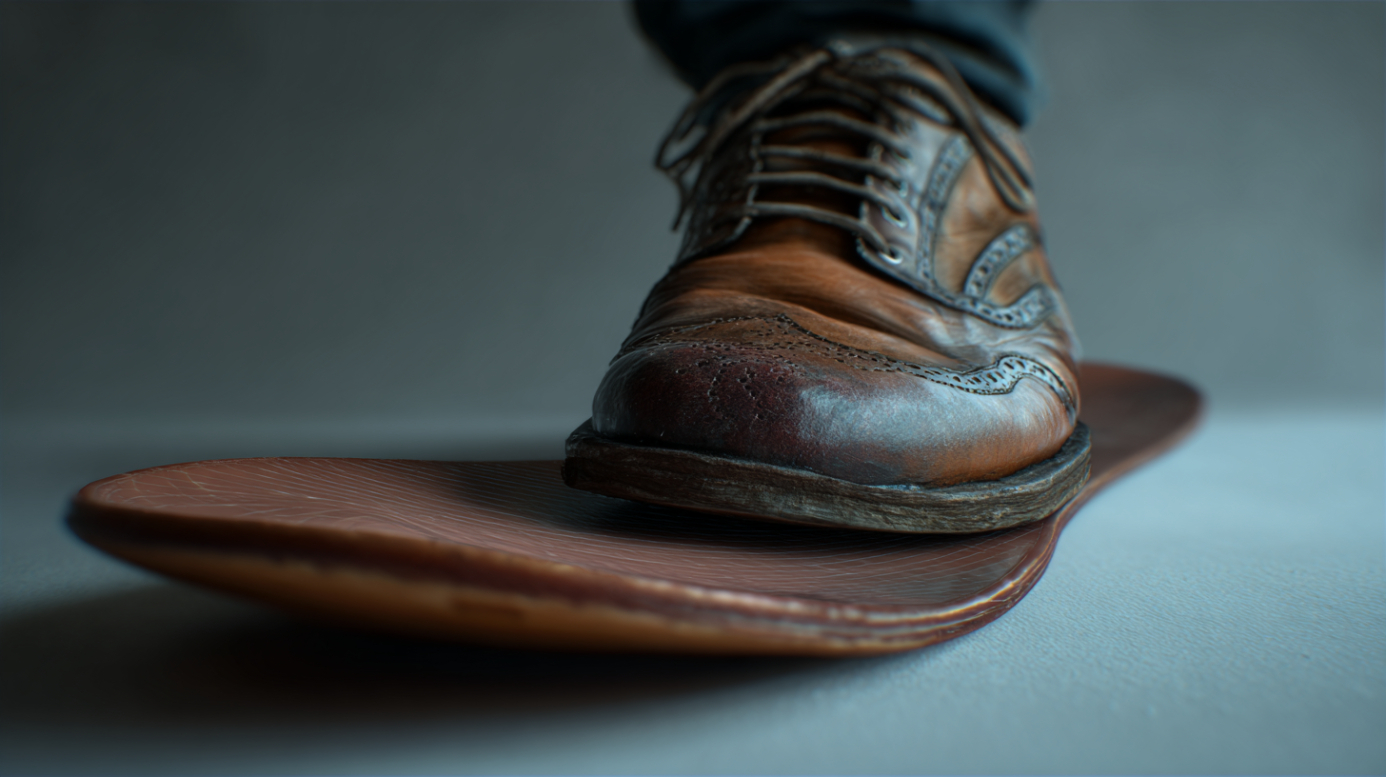
Orthotics are devices you put inside your shoes to alter foot function, provide support, redistribute pressure, or cushion sensitive areas. They come in several forms:
- Over‑the‑counter (OTC) insoles: Ready‑made inserts that provide cushioning or mild arch support.
- Prefabricated corrective orthotics: More structured OTC options designed to control pronation or provide support.
- Custom orthotics: Made from a mold or 3D scan of your foot and crafted to your specific biomechanics. They can be rigid, semi‑rigid, or soft (accommodative).
- Functional vs. accommodative: Functional orthotics aim to correct or guide motion; accommodative orthotics aim to relieve pressure and accommodate deformities.
Orthotics work by changing how your foot contacts the ground and how your lower limb moves during gait. That changes the timing and magnitude of forces transmitted through the knee.
Table: Types of orthotics — what they do and when you might use them
| Type | What it does | Typical use cases |
|---|---|---|
| Cushioned OTC insoles | Absorb shock, add comfort | Mild foot pain, plantar heel soreness, temporary relief |
| Supportive OTC insoles | Moderate arch support and stability | Mild overpronation, active people on a budget |
| Prefabricated semi‑rigid orthotics | Guide foot motion, offload abnormal stresses | Patellofemoral pain, early mechanical complaints |
| Custom semi‑rigid / rigid orthotics | Precisely control foot alignment and motion | Significant biomechanical issues, chronic pain, prescription needs |
| Accommodative custom orthotics | Cushion, reduce pressure on sensitive areas | Neuropathy, severe deformity, ulcer prevention |
Choosing the right type depends on your symptoms, foot structure, activity level, and whether you’ve had prior treatments.
How orthotics can help knee pain — the mechanisms
Orthotics may reduce knee pain through several mechanisms:
- Rebalancing alignment: By supporting the arch and controlling excessive pronation or supination, orthotics can reduce abnormal tibial rotation and improve knee tracking.
- Reducing peak forces: Orthotics can redistribute plantar pressures and alter shock transmission, which lowers peak loads through the knee during certain activities.
- Improving muscle function: Better foot positioning can change how muscles around the knee and hip activate, leading to a more efficient gait and less strain on vulnerable structures.
- Facilitating rehabilitation: Orthotics can make exercises and activity less painful, allowing you to participate more fully in strengthening and flexibility programs.
It’s important for you to know that orthotics tend to help biomechanical causes of knee pain rather than structural problems like advanced osteoarthritis or major ligament tears. In many cases, orthotics are part of a broader treatment plan that includes strengthening, stretching, and activity modification.
What the research and medical authorities say
Evidence on orthotics for knee pain is nuanced. Several reputable bodies and systematic reviews have found that orthotics can help certain knee conditions (like patellofemoral pain syndrome) while results vary by patient, orthotic type, and study design.
- The American Academy of Orthopaedic Surgeons (AAOS) recognizes that foot orthoses can be a noninvasive option for patellofemoral pain and related problems, especially when linked to abnormal foot mechanics. AAOS emphasizes individualized assessment.
- The American Podiatric Medical Association (APMA) supports the use of custom orthotics when over‑the‑counter devices don’t provide adequate correction or when a patient’s foot deformity or pathology requires a tailored approach.
- The National Institutes of Health (NIH) houses clinical studies and systematic reviews indicating that orthotics can reduce pain and improve function for some individuals with knee pain, but results are mixed and dependent on matching the right orthotic to the right patient.
Overall, the literature suggests orthotics are beneficial for many people with biomechanical or alignment‑related knee pain, but they’re not a universal cure. Treatment should be evidence‑based and tailored to your presentation.
Which types of knee pain are most likely to improve with orthotics?
Orthotics are most effective when knee pain arises from abnormal foot mechanics that cause knee malalignment or overuse. Examples include:
- Patellofemoral pain syndrome (runner’s knee): often related to poor tracking of the kneecap and linked to foot pronation.
- Overuse tendon pain with mechanical contributors: such as certain cases of patellar tendinopathy when foot mechanics increase load.
- Mild to moderate knee pain related to gait abnormalities: where correcting foot position reduces harmful forces.
Orthotics are less likely to “fix” knee pain caused by:
- Advanced osteoarthritis with severe joint space loss and structural damage
- Significant ligament tears that require surgical reconstruction
- Acute traumatic injuries with fractures or displaced bone fragments
- Systemic inflammatory arthritis where joint inflammation is the main driver
If you’re not sure where your knee pain comes from, a clinical evaluation that includes a foot and gait assessment can help determine whether orthotics are a reasonable part of your care.
When to consider a professional evaluation
You should consider a podiatric or orthopedic evaluation when:
- Your knee pain persists for several weeks despite rest, over‑the‑counter pain relief, or activity modification.
- Pain interferes with activities you used to do, like walking, working, or exercising.
- You notice visible deformity in your foot or ankle, recurring ankle sprains, or leg‑length differences.
- You have numbness, tingling, swelling, redness, or systemic symptoms (fever).
- You’ve tried generic insoles with little or no benefit.
A board‑certified podiatrist like Dr. Lauren Dabakaroff at LMD Podiatry can perform a detailed exam, gait analysis, and imaging if needed to determine whether orthotics or other treatments are appropriate. Call (954) 250‑4797 to schedule an evaluation.
The clinical evaluation and orthotic prescription process
If you pursue orthotics through a specialist, here’s what usually happens:
- Initial history and exam: Your practitioner will ask about symptoms, activity level, prior injuries, and footwear. They’ll examine your feet, ankles, knees, hips, and spine.
- Gait and motion analysis: Observing and sometimes video‑recording your walking and running pattern helps identify abnormal mechanics.
- Assessment of foot posture and flexibility: Tests will determine whether your foot is rigid or flexible, and how much control an orthotic should provide.
- Imaging if indicated: X‑rays or MRI may be ordered if structural knee or foot pathology is suspected.
- Orthotic selection: Based on findings, the clinician decides whether an OTC insert, prefabricated device, or custom orthotic is best.
- Fabrication: For custom orthotics you may undergo casting, foam impression, or 3D scanning. The lab crafts the device to the clinician’s specifications.
- Trial and follow‑up: You’ll have an adjustment period and follow‑up to tweak fit and alignment. Expect several weeks to see improvement, with periodic reassessment.
This process helps ensure the orthotic is matched to your biomechanics, which increases the likelihood that it will benefit your knee pain.
Practical tips for choosing and using orthotics
Here’s practical guidance to help you make informed decisions:
- Start with a clinical evaluation if your pain is significant, persistent, or you have other foot problems.
- If you try OTC insoles first, pick a supportive option rather than just a thin cushion. Give them a 4–6 week trial with consistent use.
- For persistent symptoms or significant biomechanical issues, consider custom orthotics. They’re more expensive but may be more effective for complex problems.
- Bring the shoes you wear most to your appointment. Orthotics need to fit your everyday footwear and athletic shoes.
- Expect an adjustment period. You may notice mild soreness as your body adapts; severe pain is a sign to stop and return to your clinician.
- Combine orthotic use with physical therapy focused on hip and knee strengthening and flexibility to maximize benefit.
- Maintain orthotics and replace them when they show signs of wear; many last 1–3 years depending on materials and your activity level.
Non‑orthotic treatments that often work with or instead of orthotics
Orthotics are not the only conservative option for knee pain. Depending on your diagnosis, you may also use:
- Physical therapy: Exercises to strengthen the quadriceps, hips, and core; gait retraining and manual therapy often produce significant improvement.
- Stretching and mobility work: Addressing tight calves, hamstrings, and hip flexors can change knee mechanics.
- Footwear changes: Shoes with proper support and shock absorption can reduce knee load.
- Activity modification: Reducing high‑impact activities and temporarily switching to low‑impact options (cycling, swimming) helps with recovery.
- Weight management: Even modest weight loss reduces knee joint loading and symptoms.
- Bracing: Patellar stabilizing braces or knee braces can provide symptomatic relief for some patients.
- Medications and injection therapies: Anti‑inflammatories, topical treatments, or in some cases corticosteroid or hyaluronic acid injections may be considered, typically under guidance from your clinician.
A combined approach often yields the best outcomes because knee pain usually stems from multiple interacting factors.
Red flags — when to seek immediate care
Certain signs require prompt evaluation:
- Sudden inability to bear weight on your leg after an injury
- Rapid, severe swelling or an obvious deformity
- Signs of infection (fever with redness and warmth)
- Numbness or progressive weakness in your leg or foot
- Worsening pain that doesn’t respond to conservative care
If you experience any of these, contact LMD Podiatry at (954) 250‑4797 or seek emergency care.
Table: Red flags and recommended action
| Red flag | What you should do |
|---|---|
| Inability to bear weight after injury | Seek urgent clinical or emergency evaluation |
| Rapid swelling, redness, warmth | Contact provider immediately; possible infection or fracture |
| New numbness/weakness | Urgent neurologic or orthopedic assessment |
| Severe, unrelenting pain | Prompt evaluation to rule out serious pathology |
Cost, insurance, and expectations
Orthotics, especially custom devices, vary widely in cost. Insurance coverage differs: some plans cover custom orthotics or provide partial reimbursement; others consider them elective. Before you commit, ask about:
- Out‑of‑pocket cost for evaluation and devices
- Warranty or follow‑up adjustments included
- Trial periods or return policies for prefabricated options
Be realistic about expectations. Orthotics often reduce pain and improve function, but they usually work best as part of a comprehensive program that includes exercise and possible footwear changes. If your knee pain is due to advanced joint degeneration or major structural damage, orthotics may provide symptomatic relief, but they are unlikely to reverse structural disease.
Case examples (how orthotics helped real scenarios)
These short, anonymized scenarios show typical outcomes without promising a similar result for everyone.
- Runner with patellofemoral pain: You’re a recreational runner who developed anterior knee pain with downhill running. Assessment revealed overpronation and weak hip abductors. A semi‑rigid custom orthotic combined with targeted physical therapy reduced your pain and allowed you to return to running gradually.
- Office worker with knee ache from standing: Your feet collapse inward after long periods on hard floors, leading to gradual medial knee pain. Supportive footwear and prefabricated orthotics provided enough control to reduce symptoms, improving daily comfort.
- Person with ankle stiffness and knee pain: Tight calves limited ankle dorsiflexion, forcing compensatory knee motion. A stretching program and orthotics with a heel lift reduced knee strain and improved walking endurance.
Each case highlights the need for individualized assessment and multimodal treatment.
Limitations and realistic outcomes
You should understand the limitations:
- Orthotics are not a one‑size‑fits‑all cure. Their effectiveness depends on matching the right device to your specific biomechanical problem.
- Some studies show short‑term benefits that may diminish if underlying muscle weakness or poor movement patterns aren’t addressed.
- Adjustments are often necessary. Custom orthotics might need reshaping or modification after you use them for a few weeks.
- If your knee pain is primarily from inflammatory disease, structural arthritis, or a torn ligament, orthotics may provide symptomatic support but are unlikely to address the underlying pathology by themselves.
Your clinician should discuss realistic goals, potential benefits, and follow‑up plans.
Practical next steps for you
If you’re wondering what to do next, follow these steps:
- Self‑check basic factors: look at your shoes for excessive wear on one side, notice how your feet look (flat or high arch), and note when your knee pain occurs (activity, time of day).
- Try sensible conservative measures: supportive footwear, a short trial of a quality OTC supportive insole, stretching tight calf muscles, and low‑impact activity.
- If pain persists beyond 4–6 weeks, get a professional evaluation. A podiatrist or orthopedic specialist can determine whether orthotics are likely to help and what type is appropriate.
- If you proceed with orthotics, commit to the trial and to complementary treatments like strengthening and flexibility training.
If you’d like a professional foot and gait assessment, contact LMD Podiatry. Dr. Lauren Dabakaroff and the team can guide you through the process and discuss whether custom orthotics or other conservative treatments are suitable for your knee pain. Call (954) 250‑4797.
Summary — can orthotics fix knee pain for you?
Orthotics can fix knee pain for some people, particularly when the pain stems from abnormal foot mechanics that increase stress on the knee. They work by realigning the foot and lower leg, redistributing forces, and sometimes enabling better muscle function. However, they’re not a guaranteed cure for every type of knee pain and work best as part of a broader treatment plan that includes strengthening, stretching, footwear changes, and activity modification.
If your knee pain is persistent, worsening, or accompanied by worrisome symptoms, a professional evaluation is a logical next step. LMD Podiatry, led by board‑certified podiatrist Dr. Lauren Dabakaroff, offers advanced foot and ankle care and can assess whether orthotics are appropriate for you. Call (954) 250‑4797 for an appointment.
This article draws on clinical guidance and evidence summarized by medical authorities such as the American Academy of Orthopaedic Surgeons (AAOS), the American Podiatric Medical Association (APMA), and research catalogued by the National Institutes of Health (NIH). Recommendations are generalized and meant to inform rather than replace individualized clinical decision‑making.
This article is for educational purposes only and is not a substitute for professional medical advice, diagnosis, or treatment.